Online Student Book


SEPUP NEWS

general issues


SEPUP News

Click here for the Winter 2011 SEPUP Newsletter

What's New with Science & Global Issues?

Cover

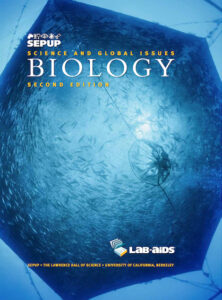
What’s new in SEPUP’s latest high school course? Science and Global Issues: Biology includes all of the support for students and teachers found in the SEPUP middle school programs, plus some new features appropriate for high school science. Key features of the program are outlined below.

In the Student Book:

    • Key vocabulary list at the end of each activity
    • End of unit concept reviews that summarize the key content in each unit
    • Case studies highlighting real-world examples that relate to the content and the issue in the unit
    • Computer simulations of some key concepts in biology, including: population dynamics, photosynthesis and cellular respiration, the carbon cycle, the structure and function of cells (including typical plant and animal cells, and specialized human cells), mitosis and meiosis, DNA replication and protein synthesis, and natural selection
    • Front matter including descriptions of: SEPUP and global issues, the organization of SEPUP materials, and how to use SEPUP materials
    • Appendices for: literacy strategies, science skills, assessment in Science and Global Issues with a copy of each Scoring Guide, a summary of the international system of units, classifying living organisms, media literacy, a summary of what science is, and the geologic timeline
    • Glossary

In the Teacher’s Edition:

    • Hardbound, wrap-around style in color
    • Text aligned to numbers on embedded Student Book pages
    • Revisit the Challenge: a summary of key content that students should understand by the end of the activity

In the Teacher Resources:

    • On CD
    • All sections are revised and updated
    • Updated literacy section that summarizes for each strategy used in the course: what it is, how to use it, and why to use it
    • Vocabulary support including templates for supporting vocabulary development
    • Section on science notebooks

Additional Resources:

    • Exam View
    • PowerPoint presentation for each activity
    • Virtual Microscope (Vscope) microscope slides
    • Online correction system: now you can submit electronically corrections and changes that you wish to report to SEPUP. You can also view corrections that affect teaching and/or learning. Click on Submit a Correction to report a correction or change to SEPUP. Click on See a List of Corrections to view those corrections that affect teaching and/or learning.

Furthermore, the revision of the physical science units is in full swing. These units examine sustainability issues from a physical science perspective. The four units look in depth at resource and energy use and at how waves affect structures and people. The full two-year Science & Global Issues course will be available in 2012. Click here for more info.

New Hydrogen & Fuel Cells Module Available

Cover

The Hydrogen Technology and Energy Curriculum (HyTEC) project has developed and field-tested a high school chemistry module titled, Investigating Alternative Energy: Hydrogen & Fuel Cells. This module is currently available and was developed by SEPUP in collaboration with the Schatz Energy Research Center (SERC) at Humboldt State University, and is published by LAB-AIDS, Inc. The new curriculum is based on SEPUP's issue-oriented and inquiry-based approaches to science teaching and learning. In a sequence of six high school classroom activities, students are introduced to hydrogen and fuel cells in the context of energy for transportation. This sequence of activities addresses National Science Education Standards and state science standards related to topics such as energy transformations, energy efficiency, chemical reactions, oxidation-reduction, stoichiometry, and societal perspectives on energy issues. We would like to thank the U.S. Department of Energy and the Alameda-Contra Costa Transit District for their support of this project. Click here for more info.

SEPUP Fall 2011 Conference Schedule

Cover

SEPUP materials will be presented at 64 workshops at 19 science education conferences this fall! Check out our schedule below for more details.


Maine Science Teachers Association Annual Fall Conference (MSTA)

October 7, 2011

Gardiner, ME

“Investigating Center of Mass”
Friday, October 7, 9:00 - 10:00AM

Arizona Science Teachers Association Conference (ASTA)

October 7-8, 2011

Phoenix, AZ

“Science and Global Issues: Biology”
Friday, October 7, 4:20 - 5:20PM

New Jersey Science Convention (NJSC)

October 11-12, 2011

Somerset, NJ

“Exploring Energy”
Tuesday, October 11, 11:30AM - 12:30PM

“Who Infected Whom? The Full Course”
Wednesday, October 12, 8:00 - 9:00AM

National Association of Biology Teachers (NABT) Conference

October 12-15, 2011

Anaheim, CA

“Using Concepts of Macroevolution and Phylogeny in High School Evolution”
Thursday, October 13, 9:30 - 10:45AM

Presentation Slides
Activity #7 - Student Book
Activity #7 - Teacher's Edition
Activity #15 - Student Book
Activity #15 - Teacher's Edition

“Using Current Issues to Teach Ecosystem and Population Dynamics”
Thursday, October 13, 12:30 - 1:45PM

Presentation Slides
Activity #7 - Student Book
Activity #7 - Teacher's Edition
Activity #7 - Student Sheet
Activity #16 - Student Book
Activity #16 - Teacher's Edition
Activity #16 - Student Sheets
Activity #16 - Transparencies

“Integrating Issues of World Health into a Life Science Classroom”
Thursday, October 13, 2:00 - 3:15PM

Presentation Slides
Activity #14 - Student Book
Activity #14 - Teacher's Edition
Activity #15 - Student Book
Activity #15 - Teacher's Edition

“Genetics: A Novel Method for Teaching Gene Expression”
Saturday, October 15, 11:15AM - 12:30PM

Presentation Slides
Activity #17 - Student Book
Activity #17 - Teacher's Edition
Student Sheet 17.1
Student Sheet 2.3
Cellular Event Cards

Iowa Science Teachers Fall Conference (ISTS)

October 17-18, 2011

Ames, IA

“What is a Species? An Issues Based Approach”
Tuesday, October 18, 9:00 - 9:45AM

“Middle School Genetics: Breeding Critters!”
Tuesday, October 18, 10:00 - 10:45AM

“Photosynthesis and Respiration Shuffle! Teaching for True Conceptual Understanding”
Tuesday, October 18, 10:00 - 10:45AM

“Issues Based Biology: Teaching About Gene Expression Through Real Issues”
Tuesday, October 18, 11:00 - 11:45AM

“Who Infected Whom? Cell Biology for Middle School - It's Catchy”
Tuesday, October 18, 2:00 - 2:45PM

“Unique ‘Wet Cell’ Helps Teach Middle Level Energy Transformation Better”
Tuesday, October 18, 3:00 - 3:45PM

National FFA Convention

October 19-22, 2011

Indianapolis, IN

“Red Light, Green Light - Reving Up Gene Expression”
Wednesday, October 19, 1:30 - 2:30PM
Friday, October 21, 9:00 - 10:0AM

“To Pile or To Spread - Does Runoff Affect Your Program?”
Wednesday, October 19, 3:00 - 4:00PM
Thursday, October 20, 3:00 - 4:00AM

“Stuck in a Teaching Rut?...(Photosynthesis) Shuffle it Up!”
Thursday, October 20, 9:00 - 10:00AM
Friday, October 21, 10:30 - 11:30AM

“OHH That Smell Coming From Your Well”
Thursday, October 20, 1:30 - 2:30PM
Friday, October 21, 3:00 - 4:00PM

California Science Education Conference

October 21-23, 2011

Pasadena, CA

“Investigating Alternative Energy: Hydrogen and Fuel Cells”
Friday, October 21, 8:00 - 9:00AM

Presentation Slides
Activity #1 - Student Book
Activity #1 - Teacher's Edition
Activity #4 - Student Book
Activity #4 - Teacher's Edition

“Genetically Modified Organisms and the Regulation of Gene Expression”
Saturday, October 22, 8:00 - 9:00AM

Presentation Slides
Activity #17 - Student Book
Activity #17 - Teacher's Edition
Student Sheet 17.1
Student Sheet 2.3
Cellular Event Cards

Illinois Science Teachers Association Conference (ISTA)

October 27-29, 2011

Tinley Park, IL

“Unique ‘Wet Cell’ Helps Teach Middle Level Energy Transformation Better”
Saturday, October 29, 8:00 - 8:50AM

“Issues Based Biology: Teaching about Gene Expression Through Real Issues”
Saturday, October 29, 11:00 - 11:50AM

NSTA Area Conference

October 27-29, 2011

Hartford, CT

“Teaching About the Rock Cycle and Earth Time”
Friday, October 28, 8:00 - 9:15AM

“Teaching About Gene Expression”
Friday, October 28, 10:00 - 11:15AM

Presentation Slides
Activity #17 - Student Book
Activity #17 - Teacher's Edition
Student Sheet 17.1
Student Sheet 2.3
Cellular Event Cards

“Teaching About Batteries”
Friday, October 28, 2:00 - 3:15PM

“Teaching About Gas Exchange”
Friday, October 28, 4:00 - 5:15PM

“Teaching About Hydrogen Fuel Cells”
Saturday, October 29, 8:00 - 9:15AM

Presentation Slides
Activity #1 - Student Book
Activity #1 - Teacher's Edition
Activity #4 - Student Book
Activity #4 - Teacher's Edition

South Carolina Science Council Conference (SC2)

November 2-4, 2011

Myrtle Beach, SC

“U.F.O. - Unknown Flying Objects”
Thursday, November 3, 9:00 - 9:45AM

“Evolution: Evidence and Explanations for the Unity and Diversity of Life”
Thursday, November 3, 10:00 - 10:45AM

West Virginia Science Teachers Association Conference (WVSTA)

November 3-5, 2011

Flatwoods, WV

“Periodic Table - Classifying Elements”
Thursday, November 3

“Erosion and Deposition - Investigating a Cliff Model”
Thursday, November 3

“‘Ecology’ - The Miracle Fish”
Thursday, November 3

“Stem Cell Differentiation”
Thursday, November 3

“Photosynthesis and Respiration Shuffle”
Thursday, November 3

Gold Coast Science Network (GCSN)

November 5, 2011

Oxnard, CA

“Fast and Furious! (Measuring Speed)”

“Investigating Chemical Batteries”

STANYS Annual Conference

November 5-8, 2011

Rochester, NY

“‘Who Infected Whom’ An Epidemiology Lesson for Intermediate Life Science”
Monday, November 7, 11:00 - 12:00PM

“Cell Differentiation and Gene Expression”
Monday, November 7, 1:45 - 2:45PM

“The Photosynthesis and Cellular Respiration Shuffle”
Tuesday, November 8, 9:30 - 10:30AM

North Carolina Science Teachers Association Conference (NCSTA)

November 10-11, 2011

Greensboro, NC

“Evolution: Evidence and Explanations for the Unity and Diversity of Life”
Thursday, November 10

“Looking for Signs of Micro-Life”
Thursday, November 10

“Fast and Furious - Force and Motion for Middle School”
Thursday, November 10

“U.F.O. - Unknown Flying Objects...”
Friday, November 11

NSTA Area Conference

November 10-12, 2011

New Orleans, LA

“Teaching About Batteries”
Friday, November 11, 8:00 - 9:15AM

“Teaching About Gene Expression”
Friday, November 11, 10:00 - 11:15AM

“Teaching About the Rock Cycle and Earth Time”
Friday, November 11, 4:00 - 5:15PM

“Teaching About Hydrogen Fuel Cells”
Saturday, November 12, 8:00 - 9:15AM

Massachusetts Association of Science Teachers Conference (MAST)

November 17-18, 2011

Boxborough, MA

“Force and Motion”
Thursday, November 17, 11:15AM - 12:15PM

Conference for the Advancement of Science Teaching (CAST)

November 17-19, 2011

Dallas, TX

“The Cell Cycle in Normal and Cancerous Cells”
Thursday, November 17, 4:30 - 5:30PM

“Interdependence and Interactions in Dynamic Ecosystems”
Friday, November 18, 11:30AM - 12:30PM

“SEPUP Force and Motion”
Saturday, November 19, 8:30 - 9:30AM

“Classification Across Science”
Saturday, November 19, 10:00 - 11:00AM

“A Novel Method for Teaching Gene Expression”
Saturday, November 19, 1:00 - 2:00PM

“Evidence and Explanations for the Unity and Diversity of Life”
Saturday, November 19, 2:30 - 3:30PM

Virginia Association of Science Teachers (VAST)

November 17-19, 2011

Roanoke, VA

“Fast and Furious - Force and Motion for Middle School”
Thursday, November 17

“Genetics: A Novel Method for Teaching Gene Expression”
Thursday, November 17

NSTA Area Conference

December 8-10, 2011

Seattle, WA

“Teaching About Batteries”
Friday, December 9, 8:00 - 9:15AM

“Teaching About Gene Expression”
Friday, December 9, 10:00 - 11:15AM

Presentation Slides
Activity #17 - Student Book
Activity #17 - Teacher's Edition
Student Sheet 17.1
Student Sheet 2.3
Cellular Event Cards

“Teaching About the Rock Cycle and Earth Time”
Friday, December 9, 4:00 - 5:15PM

“Teaching About Hydrogen Fuel Cells”
Saturday, December 10, 8:00 - 9:15AM

Presentation Slides
Activity #1 - Student Book
Activity #1 - Teacher's Edition
Activity #4 - Student Book
Activity #4 - Teacher's Edition

SEPUP in Japan

Cover

In honor of their tenth anniversary, the SEPUP group in Japan invited us to visit and work with a group of their teachers and students. Barbara Nagle and Maia Willcox were delighted to travel across the Pacific and participate in the lively exchange of ideas organized by our colleagues in Japan. Barbara presented a talk to the teachers on SEPUP’s history, approach, and recent projects. Maia worked with the teachers using some of SEPUP’s new strategies, including the “walking debate,” in which participants move around the room based on their evidence-based position on an issue. The next day Maia taught a group of middle school students two activities from a SEPUP module while the teachers observed. At the end of the lesson Maia and the teachers helped the students participate in a walking debate. Several of the SEPUP Japan teachers demonstrated lessons with both students and teachers. The event concluded with a discussion of the value of and approaches to issue-oriented science in Japan and the United States.

At the closing ceremony, the SEPUP Japan teachers spoke about how SEPUP has helped them to become better teachers by increasing their understanding and use of hands-on, inquiry-based, issue-oriented science. We are grateful to our hosts in Japan for the exchange of ideas and strategies and the great science teaching we observed during our visit.

Arigato, SEPUP Japan!

SEPUP workshop materials available for download

NSTA National Conference

March 9-13, 2011

San Francisco, CA

Wednesday, March 09

NSTA Professional Development Institute (PDI-4): Science in Context: "Helping Students Develop 21st Century Skills Through Issue-oriented Science”
Marriott San Francisco Marquis Hotel, Room Yerba Buena 4

Presentation Slides

NSELA Professional Development Institute: “Using Moderation as a Professional Development Strategy to Improve Grading Practices and Enhance Communication of Student Achievement”
8:00 - 11:00AM (AM Session #4); Hilton Union Square, Room Continental 8

Presentation Slides

Thursday, March 10

SEPUP Pathway Session: “Developing Literacy and Addressing Content Standards Through Issue-oriented Science”
8:00 - 9:00AM; Marriott San Francisco Marquis, Yerba Buena Salon 4

Presentation Slides

SEPUP Pathway Session: “Alternative Energy and Transportation: Hydrogen Fuel Cell and Other Bus Technologies”
9:30 - 10:30AM; Marriott San Francisco Marquis, Yerba Buena Salon 4

SEPUP Pathway Session: “Life Science Issues: Integrating Biodiversity Into the Teaching of Ecology and Evolution”
12:30 - 1:30PM; Marriott San Francisco Marquis, Yerba Buena Salon 4

Presentation Slides

SEPUP Pathway Session: “Green Chemistry: Using Chemistry Knowledge to Inform Societal Decisions”
2:00 - 3:00PM; Marriott San Francisco Marquis, Yerba Buena Salon 4

Presentation Slides

SEPUP Pathway Session: “Integrating Sustainability-related Issues into the Science Classroom”
3:30 - 4:30PM; Marriott San Francisco Marquis, Yerba Buena Salon 4

Presentation Slides

Friday, March 11

SEPUP Pathway Session: “Using Simulations and Modeling in an Issues-based Science Classroom”
8:00 - 9:00AM; Marriott San Francisco Marquis, Yerba Buena Salon 4

Presentation Slides

“Teaching About the Rock Cycle and Earth Time”
8:00 - 9:30AM; Moscone Center, 125

SEPUP Pathway Session: “Differentiated Instruction Related to Science and Societal Issues”
9:30 - 10:30AM; Marriott San Francisco Marquis, Yerba Buena Salon 4

Presentation Slides

“Fast and Furious: Force and Motion for Middle School”
10:00 - 11:30AM; Moscone Center, 125

SEPUP Pathway Session: “How Media Literacy Influences Thinking About Socio-scientific Issues”
11:00AM - 12:00PM; Marriott San Francisco Marquis, Yerba Buena Salon 4

Presentation Slides

“Teaching About Gene Expression”
12:00 - 1:30PM; Moscone Center, 125

Presentation Slides

SEPUP Pathway Session: “Assessing 21st-Century Skills in an Issue-oriented Science Classroom”
12:30 - 1:30PM; Marriott San Francisco Marquis, Yerba Buena Salon 4

Presentation Slides

SEPUP Pathway Session: “Integrating World Health Issues into High School Cell Biology”
2:00 - 3:00PM; Marriott San Francisco Marquis, Yerba Buena Salon 4

Presentation Slides

“What Is a Species?”
2:00 - 3:30PM; Moscone Center, 125

SEPUP Pathway Session: “Getting Kids Invested with Stories: The Car of the Future and Energy Conversions”
3:30 - 4:30PM; Marriott San Francisco Marquis, Yerba Buena Salon 4

Presentation Slides

SEPUP Pathway Session: “Teaching Core Genetics Concepts Through Issues Related to Genetically Modified Foods”
5:00 - 6:00PM; Marriott San Francisco Marquis, Yerba Buena Salon 4

Presentation Slides

Saturday, March 12

“Stem Cell Differentiation”
10:00 - 11:30AM; Moscone Center, 125

Presentation Slides

“Photosynthesis and Respiration Shuffle!”
12:00 - 1:30PM; Moscone Center, 125

“Teaching About Hydrogen Fuel Cells”
4:00 - 5:30PM; Moscone Center, 125

Presentation Slides

California Science Education Conference

October 22-24, 2010

Sacramento, CA

“Genetically Modified Organisms and the Regulation of Gene Expression”
October 22, 2010; 1:00 - 2:00PM

Presentation Slides

“Alternative Energy for Transportation: Hydrogen and Fuel Cells”
October 22, 2010; 2:30 - 3:30PM

Presentation Slides

“Teaching Properties of Materials – Get Them Sorting!”
October 23, 2010; 11:00AM - 12:00PM

NSTA Area Conference

October 28-30, 2010

Kansas City, MO

“Fast and Furious: Force and Motion for Middle School!”
October 29, 2010; 8:00 - 9:15AM

“Teaching About the Rock Cycle and Earth Time”
October 29, 2010; 10:00 - 11:15AM

“SGI Biology: Putting the Life Back in Life Science!”
October 29, 2010; 12:00 - 1:15PM

Connecticut Science Education Conference

October 30, 2010

Hamden, CT

“Teaching Genetics Through Genetically Modified Organism Related Issues”
8:30 - 9:30AM

Presentation Slides

“What Vehicle Would Isaac Newton Buy?”
8:30 - 9:30AM

“Alternative Energy for Transportation: Hydrogen and Fuel Cells”
11:15AM - 12:15PM

Presentation Slides

“How Do Creatures Know Where to Go? – Suitable Habitats”
11:15AM - 12:15PM

South Carolina Science Council (SC2)

November 3-5, 2010

Myrtle Beach, SC

“The Cell Cycle in Normal and Cancerous Cells”
November 4, 2010; 10:00 - 10:45AM

Presentation Slides

“Alternative Energy for Transportation: Hydrogen and Fuel Cells”
November 4, 2010; 1:00 - 1:45PM

Presentation Slides

National Association of Biology Teachers

November 3-6, 2010

Minneapolis, MN

“Integrating Sustainability Issues into Genetics Lessons”
November 4, 2010; 1:00 - 2:15PM

Presentation Slides

“Integrating Biodiversity Issues into an Evolution Classroom”
November 5, 2010; 3:45 - 5:00PM

Presentation Slides

“Integrating Sustainability Issues into Ecology Lessons”
November 6, 2010; 8:00 - 9:15AM

Presentation Slides

“Integrating Issues of World Health into a Life Science Classroom”
November 6, 2010; 8:00 - 9:15AM

Presentation Slides

NSTA Area Conference

November 11-13, 2010

Baltimore, MD

“Teaching About the Rock Cycle and Earth Time”
November 11, 2010; 8:00 - 9:15AM

“Teach Chemistry with Hydrogen Fuel Cells”
November 11, 2010; 2:15 - 3:30PM

Presentation Slides

“SEPUP High School Biology: Science and Global Issues”
November 11, 2010; 4:00 - 5:15PM

Presentation Slides

“Fast and Furious: Force and Motion for Middle School!”
November 12, 2010; 12:00 - 1:15PM

“SGI Biology: Putting the Life Back in Life Science!”
November 13, 2010; 8:00 - 9:15AM

Conference for the Advancement of Science Teaching (CAST) 2010

Science Teachers Association of Texas (STAT)

November 11-13, 2010

Houston, TX

“Evolution: Evidence and Explanations for the Unity and Diversity of Life”
November 11, 2010; 8:30 - 9:30AM

Presentation Slides

“The Cell Cycle in Normal and Cancerous Cells”
November 11, 2010; 10:00 - 11:00AM

Presentation Slides

“Ecology: Interdependence and Interactions in Dynamic Ecosystems”
November 11, 2010; 10:00 - 11:00AM

Presentation Slides

“Teach Chemistry with Hydrogen and Fuel Cells”
November 12, 2010; 1:30 - 2:30PM

Presentation Slides

“Genetics: A Novel Method for Teaching Gene Expression”
November 12, 2010; 3:00 - 4:00PM

Presentation Slides

“Chemistry of Materials – SEPUP”
November 13, 2010; 8:30 - 9:30AM

“Ecology – SEPUP”
November 13, 2010; 8:30 - 9:30AM

“Erosion and Deposition – SEPUP”
November 13, 2010; 3:00 - 4:00PM

North Carolina Science Teachers Association Professional Development Institute

November 11-12, 2010

Greensboro, NC

“The Cell Cycle in Normal and Cancerous Cells”
November 11, 2010; 7:30 - 8:30AM

Presentation Slides

“Middle School Genetics Made Easy, Interesting, and Fun”
November 11, 2010; 11:45AM - 12:45PM

Presentation Slides

“Alternative Energy for Transportation: Hydrogen and Fuel Cells”
November 11, 2010; 1:00 - 2:00PM

Presentation Slides

“Inquiry Teaching and Learning: The Periodic Table”
November 12, 2010; 10:30 - 11:30AM

Presentation Slides

NSTA Area Conference

December 2-4, 2010

Nashville, TN

“Teaching About the Rock Cycle and Earth Time”
December 3, 2010; 8:00 - 9:15AM

“Fast and Furious: Force and Motion for Middle School!”
December 3, 2010; 10:00 - 11:15AM

“SGI Biology: Putting the Life Back in Life Science!”
December 3, 2010; 12:00 - 1:15PM

SEPUP at the National Hydrogen Association

Long Beach, CA 2010

Tuesday, May 4

“Hydrogen Technology and Energy Curriculum (HyTEC) for High School Science”
Barbara Nagle, SEPUP Director

Presentation Slides

SEPUP at NSTA

Philadelphia, PA 2010

Wednesday, March 17

Professional Development Institute—“Issue-oriented Science: Engage, Motivate, and Educate”
Barbara Nagle, SEPUP Director
John Howarth, SEPUP Associate Director
Laura Lenz, SEPUP Instructional Materials Developer

Presentation Slides

Thursday, March 18

“Developing Literacy and Addressing Content Standards Through Issue-oriented Science”
Laura Lenz, SEPUP Instructional Materials Developer
Donna Markey, Teacher at Vista Magnet Middle School; Vista, CA

Presentation Slides

“Alternative Energy for Transportation: Hydrogen and Fuel Cells”
Barbara Nagle, SEPUP Director

Presentation Slides

“Teaching Chemistry with Hydrogen and Fuel Cells”
Barbara Nagle, SEPUP Director

Presentation Slides

“Integrating Biodiversity Issues into Ecology and Evolution Units”
Laura Lenz, SEPUP Instructional Materials Developer

Presentation Slides

Friday, March 19

“Integrating Sustainability into the Science Classroom”
Laura Lenz, SEPUP Instructional Materials Developer
John Howarth, SEPUP Associate Director

Presentation Slides

“Differentiating Instruction Related to Science and Societal Issues”
Barbara Nagle, SEPUP Director
Kathaleen Burke, Buffalo Science Teachers' Network; Buffalo, NY

Presentation Slides

“Integrating World Health Issues into a Life Science Classroom”
Laura Lenz, SEPUP Instructional Materials Developer

Presentation Slides

“Teaching About Trade-offs: How Science Can Inform the Decision Making Process”
Barbara Nagle, SEPUP Director
John Howarth, SEPUP Associate Director

Presentation Slides

“Using Issues as a Context for Teaching Science Content and Inquiry”
John Howarth, SEPUP Associate Director

Presentation Slides

News: 2006 and earlier

Spring 2006: Focus on Literacy

Strategies for supporting literacy are highlighted in this issue, with particular emphasis on their role in formative assessment. Several examples are provided including a writing frame, an anticipation guide, and concept mapping. There is an article about the use of literacy strategies to address the needs of diverse learners. In addition, details about SEPUP's new middle school course, Issues and Earth Science, are presented along with a description of SEPUP's development of materials on hydrogen fuel cells for the Department of Energy, in conjunction with the Schatz Energy Research Center at Humboldt State University.

Click here to download a pdf version of the Spring 2006 SEPUP News.


Spring 2005: Focus on Issue-Oriented Science

This issue provides both conceptual background and practical information about issue-oriented science—the core of SEPUP's approach to science education. In addition to a useful overview of the issue-oriented curriculum, there is an article about the role of evidence and trade-offs, the role of issues in the SEPUP instructional model which is exemplified by a sample activity, teaching tips for the issue-oriented classroom, pointers for developing media literacy among SEPUP students, and more.

Click here to download a pdf version of the Spring 2005 SEPUP News.


Fall 2004: Focus on the Classroom Learning Environment

The broad range of articles in this issue provides teachers with guidance, resources, and suggestions for using SEPUP with their students. Featured in this issue are an overview of types of learning environments, a sample activity highlighting SEPUP's 4-2-1 approach to cooperative learning, suggestions for materials management, and an examination of questioning in the classroom.

Click here to download a pdf version of the Fall 2004 SEPUP News.


Spring 2004: Focus on Inquiry

This issue, just in time for NSTA, addresses a variety of aspects of inquiry in the science classroom including a description of the SEPUP approach to inquiry, how to use current events to promote inquiry, a sample SEPUP activity, and implementation of inquiry and the National Science Education Standards.

Click here to download a pdf version of the Spring 2004 SEPUP News.


Fall 2003: Focus on Assessment

In Fall 2003, we decided to devote each issue of the SEPUP News to a specific topic related to SEPUP instructional materials and SEPUP's approach to science education in order to build a reference library for SEPUP teachers.

This first “focused” issue provides a range of articles about the SEPUP Assessment System including classroom examples, a selected bibliography, teacher experiences, background information and useful diagrams.

Click here to download a pdf version of the Fall 2003 SEPUP News.