SEPUP at NSTA
Philadelphia, PA 2010
SEPUP will be attending the NSTA 2010 National Conference in Philadelphia, PA from March 17-21. Please see our schedule of events below. Lab-Aids, our publisher, will be presenting additional workshops. We hope to see you there!
All sessions in Room 404 at the Marriott Hotel, unless otherwise noted.
Wednesday, March 17
Professional Development Institute (All Day): “Issue-oriented Science: Engage, Motivate, and Educate”
Thursday, March 18
“Developing Literacy and Addressing Content Standards Through Issue-oriented Science,” 8:00am
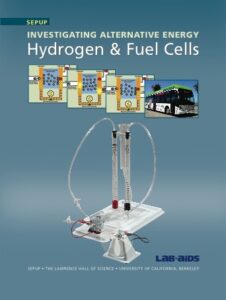
“Alternative Energy for Transportation: Hydrogen and Fuel Cells,” 9:30am
“Using Hands-on Issue-oriented Science to Investigate Important Concepts in Physical Science,” 12:30pm
“Teaching Chemistry with Hydrogen and Fuel Cells,” 12:30pm (Location: Loews Philadelphia Hotel, Commonwealth D)
“Integrating Biodiversity Issues into Ecology and Evolution Units,” 2:00pm
“Getting Kids Invested with Stories: The Car of the Future,” 3:30pm
Friday, March 19
“Green Chemistry: Using Chemistry Knowledge to Inform Societal Decisions,” 8:00am
“Integrating Sustainability into the Science Classroom,” 9:30am
“Differentiating Instruction Related to Science and Societal Issues,” 11:00am
“Integrating World Health Issues into a Life Science Classroom,” 12:30pm
“Teaching about trade-offs: How science can inform the decision making process,” 2:00pm
“Using Issues as a Context for Teaching Science Content and Inquiry,” 3:30pm
SEPUP research and development results will be presented at the NARST 2010 National Conference in Philadelphia, PA. Kristin Nagy Catz of the LHS Research, Evaluation, and Assessment Center will present a paper co-authored with SEPUP's Laura Lenz. The presentation is titled: “Addressing Misconceptions in Evolution at the High School Level.” Kristin hopes to see you there!
Revision work continues on SEPUP’s forthcoming high school course, Science and Global Issues. With plans in place to publish the Biology units in the course, which will be available for the 2010-2011 school year, our biology developers have been focusing on integrating feedback from our field test teachers into the introductory Sustainability unit and the four Biology units— “Ecology: Living on Earth,” “Cell Biology: World Health,” “Genetics: Feeding the World,” and “Evolution: Maintaining Diversity.” Each of the units will focus on a global sustainability issue. Ecology looks at ecosystems and change, cell biology examines world health, genetics delves into genetic modification, and evolution explores biodiversity and conservation.
In the meantime, our physical science developers are working on the other half of the course, including units on electricity, waves and how they impact various aspects of our world, Earth’s resources, and fueling the world. With the completion of these revisions, the full two-year course will be available in the beginning of 2011.
In addition to the Science and Global Issues curriculum, SEPUP is hard at work on the revision of the Hydrogen Technology and Energy Curriculum (HyTEC). This project is funded by the Department of Energy and AC Transit. Scientific and technical expertise are provided by our partners at the Schatz Energy Research Center at Humboldt State University and AC Transit, both leaders in the development of hydrogen and fuel cell technology for transportation. The HyTEC curriculum is based on SEPUP's issue-oriented and inquiry-based approaches to science teaching and learning. In a sequence of six high school classroom activities, students are introduced to hydrogen and fuel cells in the context of energy for transportation. This sequence of activities addresses National Science Education Standards and state science standards related to topics such as energy transformations, energy efficiency, chemical reactions, oxidation-reduction, stoichiometry, and societal perspectives on energy issues. We have been integrating feedback from numerous field test teachers into the final version of the curriculum, which should be available this spring.
In 2009, Sara Dombokski became Sara Wilmes after her marriage to Paul Wilmes in Buffalo, New York. Sara and Paul moved to Paul’s home country of Luxembourg in January of 2010. They will welcome their first child in the summer. Sara is continuing to work on SGI from Luxembourg. Chris Keller recently became engaged to Carly Wilson in Colorado in the Fall of 2009. They are planning to tie the knot this summer in Mendocino, California.
See how well you know the SEPUP staff by matching trivia to the team member. There are between 2 and 4 pieces of trivia for each U.S. based-member of SEPUP. Click here to take the quiz.
SEPUP at NSTA
Philadelphia, PA 2010
Wednesday, March 17
Professional Development Institute (All Day)—“Issue-oriented Science: Engage, Motivate, and Educate”
Thursday, March 18
“Developing Literacy and Addressing Content Standards Through Issue-oriented Science,” 8:00am
“Alternative Energy for Transportation: Hydrogen and Fuel Cells,” 9:30am
“Using Hands-on Issue-oriented Science to Investigate Important Concepts in Physical Science,” 12:30pm
“Teaching Chemistry with Hydrogen and Fuel Cells,” 12:30pm
“Integrating Biodiversity Issues into Ecology and Evolution Units,” 2:00pm
“Getting Kids Invested with Stories: The Car of the Future,” 3:30pm
Friday, March 19
“Green Chemistry: Using Chemistry Knowledge to Inform Societal Decisions,” 8:00am
“Integrating Sustainability into the Science Classroom,” 9:30am
“Differentiating Instruction Related to Science and Societal Issues,” 11:00am
“Integrating World Health Issues into a Life Science Classroom,” 12:30pm
“Teaching about trade-offs: How science can inform the decision making process,” 2:00pm
“Using Issues as a Context for Teaching Science Content and Inquiry,” 3:30pm
SEPUP at NSTA - Phoenix Area Regional
Phoenix, AZ 2009
Saturday, December 5
“Alternative Energy for Transportation: Hydrogen and Fuel Cells”
Chris Keller, SEPUP Instructional Materials DeveloperPresentation Slides
Activity 4: Modeling the Fuel Cell ReactionSEPUP at NABT
Denver, CO 2009
Thursday, November 12
“Integrating Sustainability Issues Into a Biology Classroom”
Laura Lenz, SEPUP Instructional Materials Developer
Maia Willcox, SEPUP Instructional Materials Developer“Integrating Biodiversity Issues into an Evolution Classroom”
Laura Lenz, SEPUP Instructional Materials Developer
Maia Willcox, SEPUP Instructional Materials DeveloperSEPUP at CAST
Galveston, TX 2009
Friday, November 6
“Teach Chemistry with Hydrogen and Fuel Cells”
Barbara Nagle, Director of SEPUPPresentation Slides
Activity 4: Modeling the Fuel Cell ReactionWednesday, November 4
TSELA: “Research and Best Practice for Student Engagement in Science”
Barbara Nagle, Director of SEPUPSEPUP at STANYS
Rochester, NY 2009
Tuesday, November 3
“Alternative Energy for Transportation: Hydrogen and Fuel Cells”
Chris Keller, SEPUP Instructional Materials DeveloperPresentation Slides
Activity 4: Modeling the Fuel Cell ReactionSEPUP at CSTA
Palm Springs, CA 2009
Friday, October 23
“Teaching Chemistry with Hydrogen and Fuel Cells”
Barbara Nagle, Director of SEPUPPresentation Slides
Activity 4: Modeling the Fuel Cell ReactionSaturday, October 24
“Teaching Ecology Concepts Through Sustainability Issues”
Maia Willcox, SEPUP Instructional Materials DeveloperSEPUP at Connecticut Science Education Conference
Hamden, CT 2009
Saturday, October 17
“Hydrogen and Fuel Cells”
Barbara Nagle, Director of SEPUPPresentation Slides
Activity 4: Modeling the Fuel Cell ReactionSEPUP at NSTA
New Orleans, LA 2009
Wednesday, March 18
“NSTA Professional Development Institute, Issue-oriented Science: Engage, Motivate, Educate”
Barbara Nagle, Director of SEPUP
John Howarth, SEPUP Instructional Materials Developer
Sara Dombkowski, SEPUP Instructional Materials DeveloperMaterials
Presentation Slides
Tools to Support Issue-oriented Science
Issue-oriented Science Design TemplateThursday, March 19
“Developing Literacy and Addressing Content Standards Through Issue-oriented Science”
Laura Lenz, SEPUP Instructional Materials Developer“Integrating Biodiversity Issues into Biology Units”
Sara Dombkowski, SEPUP Instructional Materials Developer
Laura Lenz, SEPUP Instructional Materials DeveloperFriday, March 20
“Ethanol: The Cleaner Burning Alternative”
Barbara Nagle, SEPUP DirectorEthanol Activity
Slides of Presentation“Alternative Energy for Transportation: Hydrogen and Fuel Cells”
Barbara Nagle, SEPUP DirectorActivity #4
Slides of Presentation“Integrating Sustainability into the Science Classroom”
John Howarth, SEPUP Instructional Materials Developer
Laura Lenz, SEPUP Instructional Materials Developer“Using Issues as a Context for Teaching Science Content and Inquiry”
John Howarth, SEPUP Instructional Materials DeveloperSaturday, March 21
“Teach Chemistry with Hydrogen and Fuel Cells”
Barbara Nagle, SEPUP Director
John Howarth, SEPUP Instructional Materials DeveloperActivity #4
Slides of Presentation“Leading Discussions about the Societal Impacts of Advances in Nanotechnology”
Sara Dombkowski, SEPUP Instructional Materials Developer
Darrell Porcello, Director of CTI at the Lawrence Hall of ScienceSEPUP at CSTA
San Jose, CA 2008
Thursday, October 30
“Learning Biology Through Global Issues”
Laura Lenz, SEPUP Instructional Materials Developer
Maia Willcox, SEPUP Instructional Materials DeveloperFriday, October 31
“The Chemistry of Hydrogen Fuel Cells”
Barbara Nagle, SEPUP DirectorSEPUP at NABT
Memphis, TN 2008
Friday, October 17
“Learning Biology Through Global Issues”
Maia Willcox, SEPUP Instructional Materials DeveloperSEPUP at NSTA
Boston, 2008
Wednesday, March 26
“Issue-Oriented Science: Engage, Motivate, Educate”
Barbara Nagle, SEPUP Director
Sara Dombkowski, SEPUP Instructional Materials Developer
Kathy Burke, Buffalo Science Teacher Network
Donna Markey, Vista Unified School District, CAThursday, March 27
“Getting Kids Invested with Stories: The Car of the Future”
Laura Baumgartner, Science Teacher Robinswood High, Bellevue, WA
Jud Hill, EDC’s Center for Science Education
slide presentation“Developing Literacy Through Issue-Oriented Science”
Laura Lenz, SEPUP Instructional Materials Developer
Donna Markey, Vista Unified School District, CA
Maia Willcox, SEPUP Instructional Materials DeveloperFriday, March 28
“Teaching with Hydrogen Fuel Cells”
Laura Baumgartner, Science Teacher Robinswood High, Bellevue, WA
Barbara Nagle, SEPUP Director
slide presentation“Ethanol: The Cleaner Burning Alternative?”
Donna Parker, APES & Biology Teacher, Dublin Coffman High School, Dublin, OH
Barbara Nagle, SEPUP DirectorSaturday, March 29
“Using Issue-Oriented Science to Integrate Writing and Science Literacy”
Laura Lenz, SEPUP Instructional Materials Developer
Maia Willcox, SEPUP Instructional Materials Developer“Assessing Students’ Understanding of Science and Societal Issues”
Donna Markey, Vista Unified School District, CA
Barbara Nagle, SEPUP DirectorSEPUP at NSTA
St. Louis, 2007
Friday, March 30
“Connecting Science, Societal Issues, and Middle School Students”
Middle Luncheon Presentation, Barbara Nagle, SEPUP Director
“Formative Assessment in Secondary Life Science”
Barbara Nagle, SEPUP Director
“Improving Small-Group Discussion”
Sara Dombkowski, SEPUP Instructional Materials DeveloperSaturday, March 31
“Teaching Chemistry with Hydrogen Fuel Cells”
Barbara Nagle, SEPUP DirectorSEPUP at CSTA
San Francisco, 2006
Friday, October 20
“Improving Group Talk”
Sara Dombkowski, SEPUP Instructional Materials Developer, and Donna Markey, SEPUP teacher Associate
Slide presentation
Workshop materials
Saturday, October 21
“Teaching Chemistry with Hydrogen and Fuel Cells”
Dr. Barbara Nagle, SEPUP Director and Jim Zoellick, Schatz Energy Research Center, Humboldt State University
Slide presentation
Fuel cell simulationSEPUP at NSTA
Anaheim, 2006
Friday, April 7
“Literacy Strategies in Earth Science”
Janet Bellantoni, SEPUP Instructional Materials DeveloperSunday, April 9
“Formative Assessment in Secondary Life Science”
Barbara Nagle, SEPUP Director
Workshop materials
Slide presentationSEPUP at NSTA
Dallas, 2005
Wednesday, March 30 to Thursday, March 31
Professional Development Institute: “Understanding Student Learning Through Assessment in Science,”
Lawrence Hall of Science leaders from SEPUP, GEMS, FOSS and other programs
Workshop materials (Barbara Nagle's session)Friday, April 1
“Assessing Inquiry in Middle School Science,”
Barbara Nagle, SEPUP Director, and Lee Amosslee, SEPUP Instructional Materials Developer
Workshop materials
Slide presentation“Assessing Inquiry in High School Science,”
Barbara Nagle, SEPUP Director, SEPUP Instructional Materials Developer
Workshop materials
Slide presentation
Spring 2006: Focus on Literacy
Strategies for supporting literacy are highlighted in this issue, with particular emphasis on their role in formative assessment. Several examples are provided including a writing frame, an anticipation guide, and concept mapping. There is an article about the use of literacy strategies to address the needs of diverse learners. In addition, details about SEPUP's new middle school course, Issues and Earth Science, are presented along with a description of SEPUP's development of materials on hydrogen fuel cells for the Department of Energy, in conjunction with the Schatz Energy Research Center at Humboldt State University.
Click here to download a pdf version of the Spring 2006 SEPUP News.
Spring 2005: Focus on Issue-Oriented Science
This issue provides both conceptual background and practical information about issue-oriented science—the core of SEPUP's approach to science education. In addition to a useful overview of the issue-oriented curriculum, there is an article about the role of evidence and trade-offs, the role of issues in the SEPUP instructional model which is exemplified by a sample activity, teaching tips for the issue-oriented classroom, pointers for developing media literacy among SEPUP students, and more.
Click here to download a pdf version of the Spring 2005 SEPUP News.
Fall 2004: Focus on the Classroom Learning Environment
The broad range of articles in this issue provides teachers with guidance, resources, and suggestions for using SEPUP with their students. Featured in this issue are an overview of types of learning environments, a sample activity highlighting SEPUP's 4-2-1 approach to cooperative learning, suggestions for materials management, and an examination of questioning in the classroom.
Click here to download a pdf version of the Fall 2004 SEPUP News.
Spring 2004: Focus on Inquiry
This issue, just in time for NSTA, addresses a variety of aspects of inquiry in the science classroom including a description of the SEPUP approach to inquiry, how to use current events to promote inquiry, a sample SEPUP activity, and implementation of inquiry and the National Science Education Standards.
Click here to download a pdf version of the Spring 2004 SEPUP News.
Fall 2003: Focus on Assessment
In Fall 2003, we decided to devote each issue of the SEPUP News to a specific topic related to SEPUP instructional materials and SEPUP's approach to science education in order to build a reference library for SEPUP teachers.
This first “focused” issue provides a range of articles about the SEPUP Assessment System including classroom examples, a selected bibliography, teacher experiences, background information and useful diagrams.Click here to download a pdf version of the Fall 2003 SEPUP News.